If you're looking to improve the appearance of your teeth, composite bonding and porcelain veneers are two of the most popular options available. Both can transform a smile — but they work differently, suit different situations, and involve different commitments. Understanding those differences is the key to making a confident decision.
This guide walks through what each treatment involves, where they differ, and which might be the better fit depending on your goals.
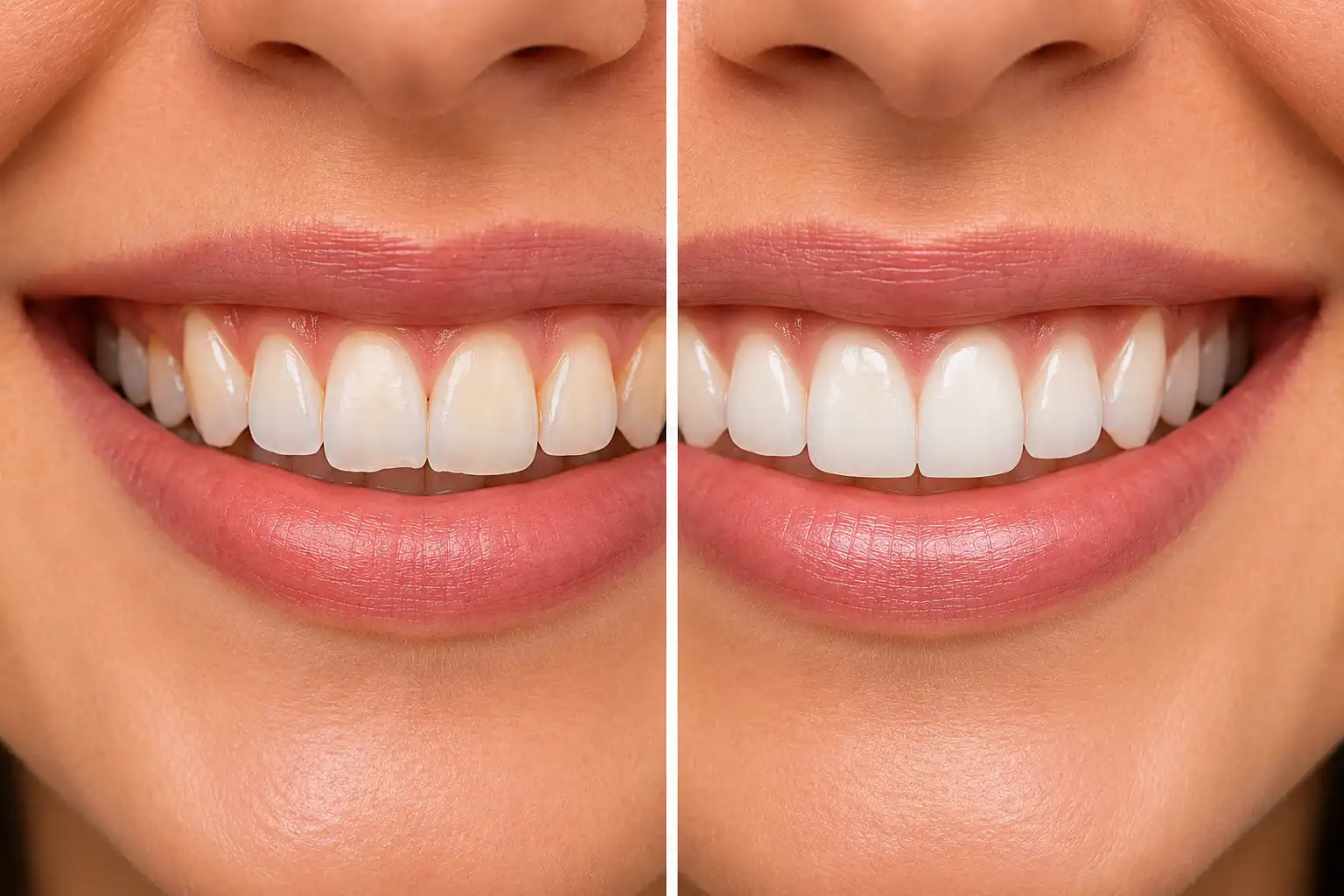
Composite bonding is a minimally invasive cosmetic treatment that uses tooth-coloured resin to reshape and improve the appearance of a tooth. The resin is applied directly to the tooth surface, sculpted into the desired shape, then hardened and polished — typically all within a single appointment.
Because the treatment doesn't require any removal of existing tooth structure, it's completely reversible. In many cases no anaesthetic is needed at all.
Composite bonding is well suited to:
The results look natural and blend well with surrounding teeth. With proper care, composite bonding typically lasts between five and ten years before a refresh may be needed.

Porcelain veneers are thin shells of porcelain or ceramic that are custom-made and permanently bonded to the front surface of a tooth. Unlike composite bonding, veneers are crafted in a laboratory to precise specifications, which means the process usually takes place over two appointments.
At the first visit, your dentist assesses suitability and takes an impression. At Limes, we recommend a zero-preparation approach wherever possible — meaning little or no enamel is removed before the veneer is fitted. Where some preparation is needed, the goal is always to preserve as much natural tooth structure as possible.
Veneers are a permanent treatment. Once enamel has been prepared, the process cannot be reversed, so it's important to be certain before proceeding. For patients who are good candidates, though, veneers offer results that are exceptionally durable and highly resistant to staining.
Porcelain veneers tend to be a strong choice for:
With good care, veneers typically last ten years or more.
The two treatments share the same goal — a more confident, natural-looking smile — but they differ in several important ways.
Reversibility. Composite bonding leaves your natural teeth entirely intact and can be removed or adjusted at any point. Veneers, once placed, are a permanent change. This makes composite bonding the lower-commitment option, particularly for patients who are newer to cosmetic dentistry.
Number of appointments. Composite bonding is usually completed in a single visit. Veneers require at least two — one for assessment and impression, one for fitting.
Longevity. Porcelain veneers generally outlast composite bonding. Veneers can last a decade or more with good care; composite bonding typically needs refreshing after five to ten years, though this is a straightforward process.
Stain resistance. Porcelain and ceramic veneers are highly resistant to staining. Composite resin is more susceptible to discolouration over time, particularly from coffee, tea, or red wine.
Scope of change. For minor corrections — a chip, a small gap, a slightly misshapen tooth — composite bonding often delivers excellent results with less intervention. For a more comprehensive smile transformation, or where several teeth need significant improvement, veneers may give a more consistent and durable outcome.
There's no single right answer — the best treatment depends on the condition of your teeth, your aesthetic goals, and how much of a long-term commitment you're ready to make.
As a general guide:
Composite bonding may be the better starting point if your concerns are minor, you prefer a reversible option, or you'd like to see results quickly without multiple appointments.
Porcelain veneers are more likely to be the right fit if you're looking for a more significant transformation, want maximum durability and stain resistance, or have aesthetic concerns that composite resin alone may not fully address.
It's also worth considering treatments in combination. Many patients choose to have their teeth whitened before veneers or bonding — both to achieve the best possible shade match and to maximise the overall result. You can read more about teeth whitening at Limes Dental Practice.
Ultimately, the most important step is a consultation with an experienced dentist who can assess your teeth properly and advise which approach — or combination — will give you the result you're looking for.
At Limes Dental Practice, we offer both composite bonding and porcelain veneers as part of our cosmetic dentistry services. Every patient's situation is different, and we'll take time to understand your goals before recommending any treatment.
To find out which option is right for you, get in touch to arrange a consultation at our practice on Stroud Road, Gloucester.