
If your dentist has hinted that "a filling might not hold this one," you are probably wondering whether you really need a crown or whether you can stretch a filling instead. The honest answer is that crowns and fillings do different jobs, and there are clear clinical signs that tip the balance.
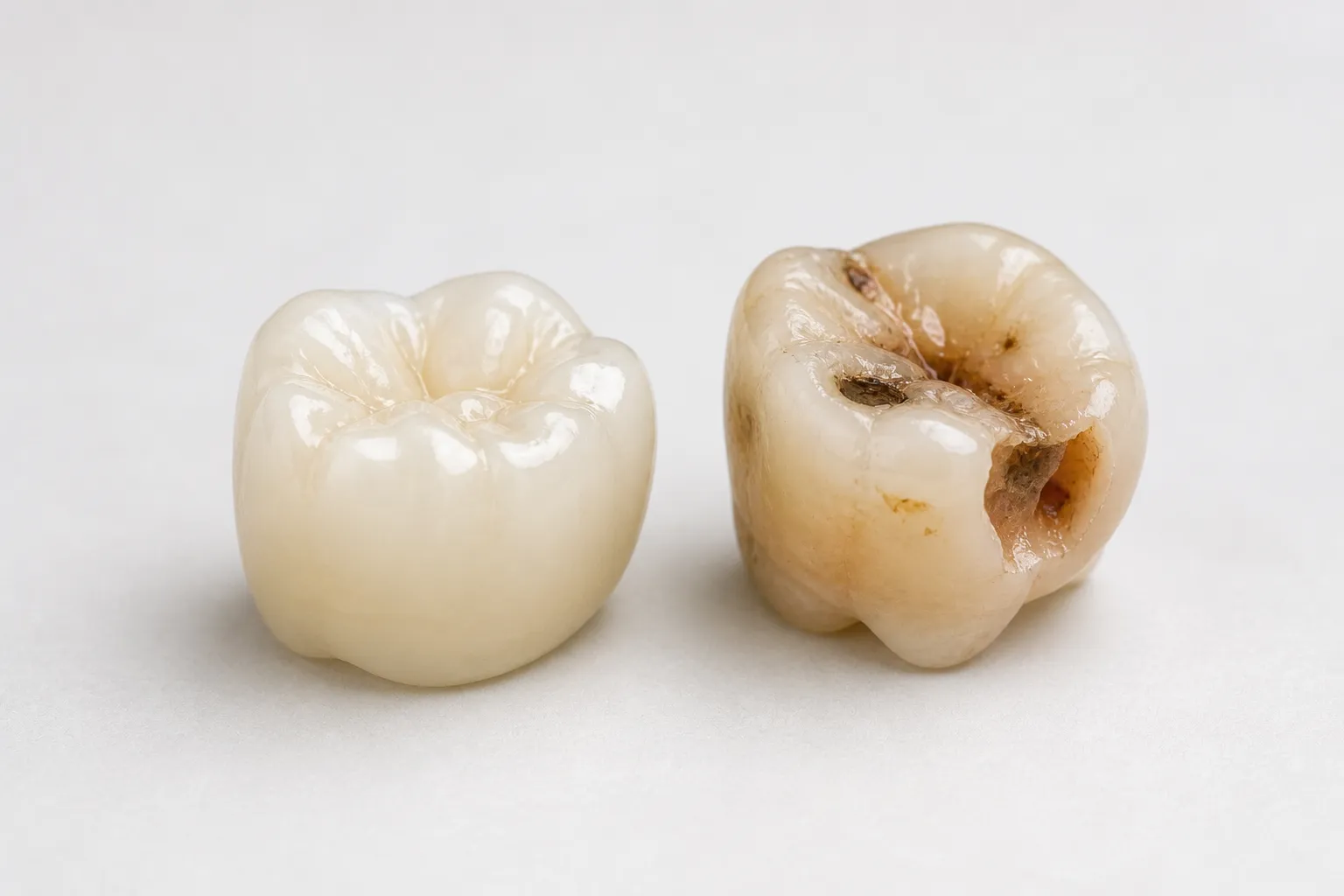
Here are five of the most common signs, from the team at The Limes Dental Practice in Gloucester.
Fillings rely on the surrounding tooth to hold them in place. When a cavity or an old filling covers more than half of the visible part of the tooth, there is not enough sound structure left for a new filling to grip. Every time you bite down, the filling acts like a wedge against thin tooth walls. Eventually, the filling fails or the tooth fractures.
A crown caps the entire visible tooth and spreads bite force across the whole structure. That is why we often recommend crowns at The Limes Dental Practice as "the save" for teeth that have lost too much of themselves to be patched.
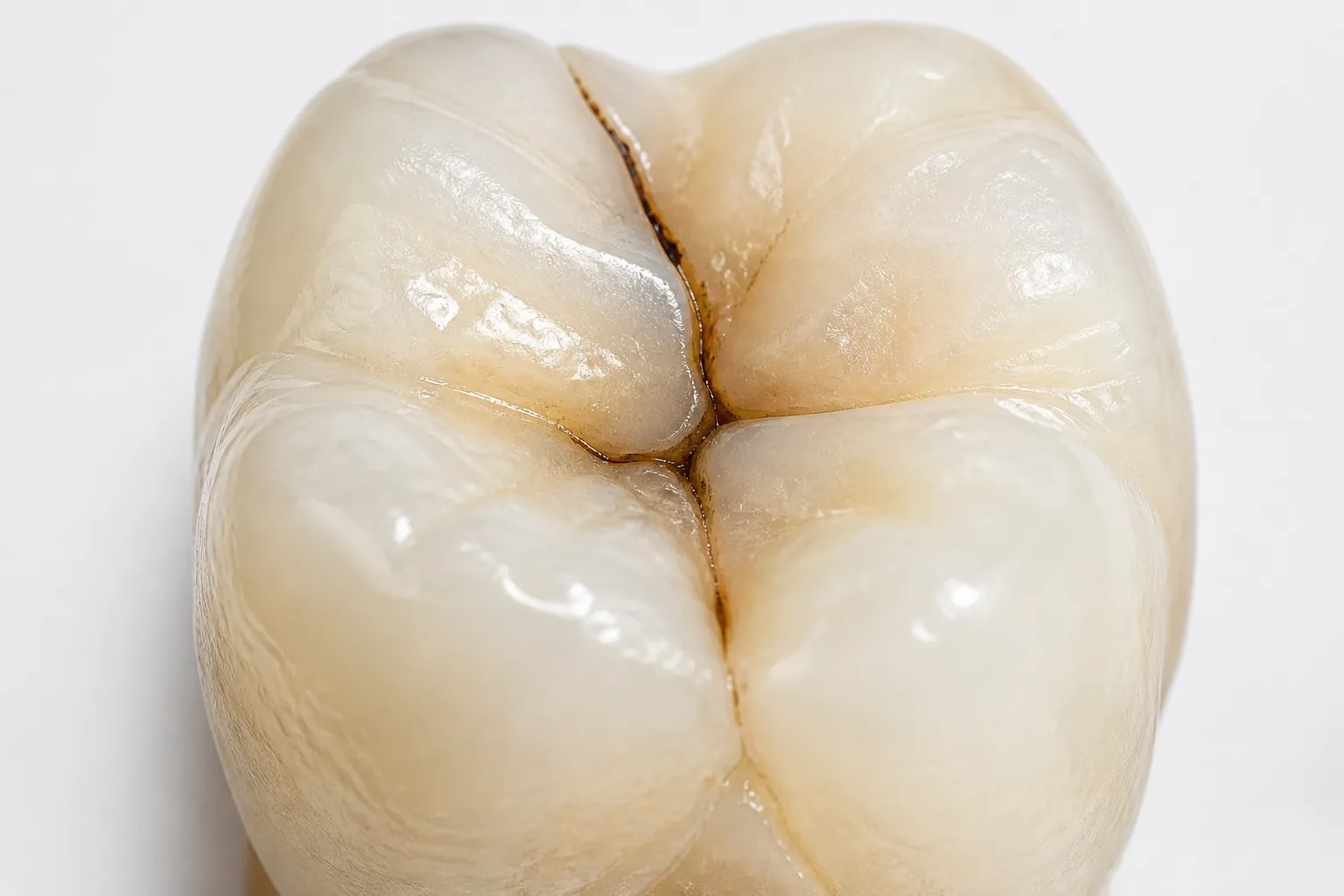
Cracks are tricky. They are sometimes invisible on a normal X-ray and may only show up under magnification. A classic sign of a crack is sharp pain when you bite something hard, which then settles within a second or two.
Unlike bone, a tooth does not heal a crack. Left alone, it travels deeper toward the nerve or splits the root. A crown placed early can hold the tooth together and stop the crack progressing. Our blog on same-day crowns walks through how we can sometimes stabilise a tooth in a single visit.
Root canal treatment is a brilliant way to save a tooth, but it leaves the tooth structurally weaker. For molars and premolars—the back teeth that do most of the heavy lifting—a crown after a root canal is usually the right call. It is the difference between a tooth that lasts five years and one that lasts twenty.
If tooth-coloured fillings on the same tooth have failed repeatedly, the issue is rarely the material itself. It is that the tooth lacks the structure to hold a filling reliably. A crown sidesteps this loop by stabilising the whole tooth in one go, which is often more cost-effective over a decade.
Molars take roughly 70% of your chewing load. If you clench or grind (bruxism), they take even more. When we see patients with these habits, we are quicker to recommend a crown for a borderline tooth, as the cost of "wait and see" can be the loss of the tooth altogether. In these cases, we may provide emergency dentistry or repairs if a fracture occurs suddenly. You can read more about emergency crown repair here.
A crown is primarily a structural solution. If you want to change the appearance of a tooth without structural damage, options like veneers or bonding are often better. We follow NICE guidelines and NHS dental treatment principles to ensure we only recommend invasive work when it is clinically necessary.
A clinical exam plus imaging is the only reliable way. Pain on biting and repeated filling failure are strong indicators.
Usually yes for back teeth (molars and premolars). Front teeth may not always require one if enough healthy structure remains.
A well-made crown typically lasts 10 to 15 years, often much longer with good hygiene.
Delaying a necessary crown risks a catastrophic fracture that could lead to tooth loss.
Book online or call 01452 523089. The Limes Dental Practice, 168 Stroud Road, Gloucester GL1 5JX.
Reviewed by Dr Andrew Connolly, BDS MSc Implant Dent, Principal Dentist at The Limes Dental Practice.


