Reviewed by Dr Andrew Connolly BDS MSc Implant Dent, Principal Dental Surgeon · Limes Dental Practice · August 2026
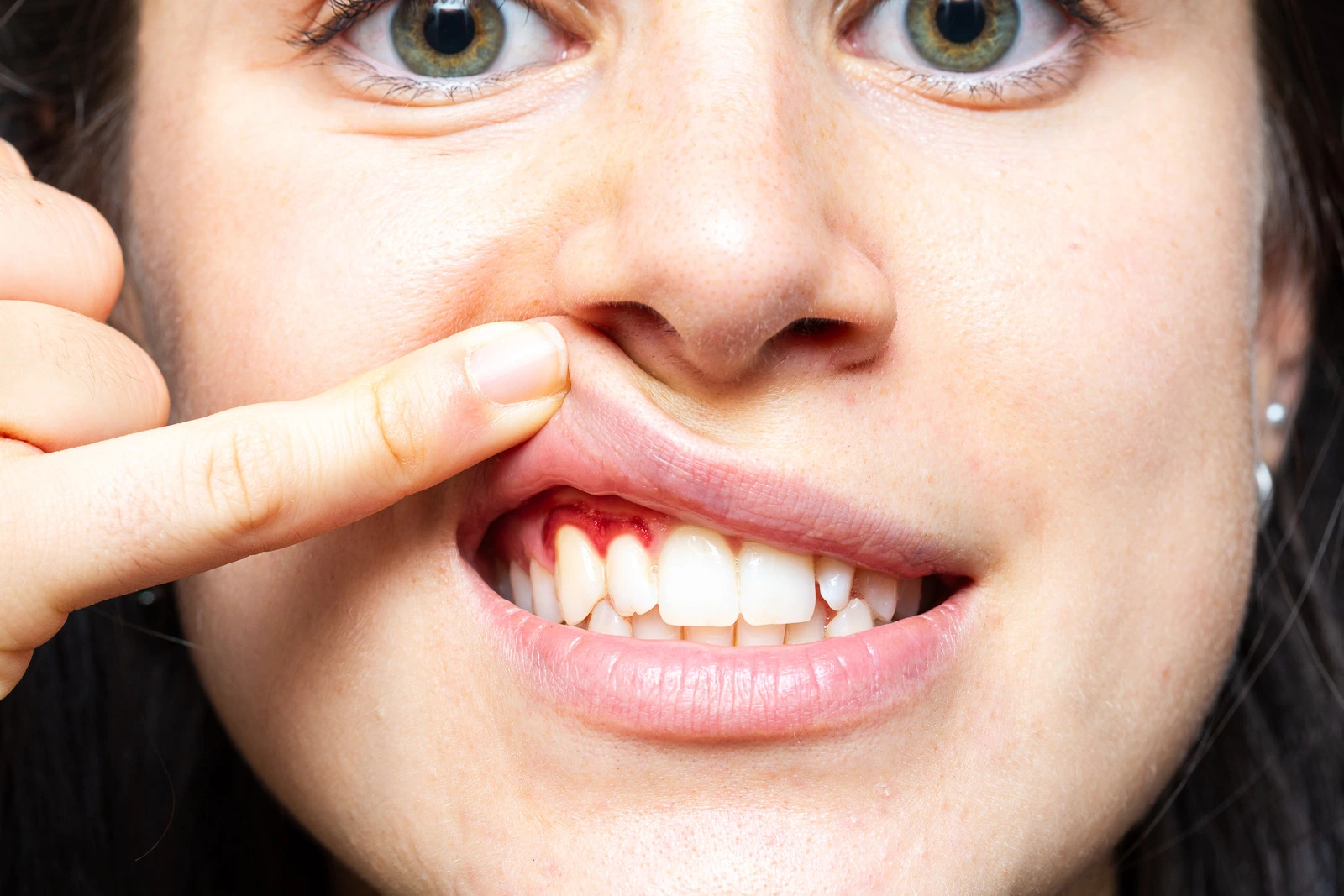
Seeing blood in the sink after brushing is common, but it isn't something healthy gums are supposed to do. Bleeding is your gum tissue telling you it's inflamed — the question is simply why, and whether it needs anything more than a closer look at your daily routine.
Most of the time, the cause is straightforward and easy to fix. Occasionally it's a sign of something that needs a hygienist's attention before it progresses. This guide walks through both, so you know which situation you're actually in.
Gum tissue bleeds for the same reason any soft tissue in the body bleeds — small blood vessels near the surface are being disturbed. Around your teeth, this almost always comes down to inflammation. When gum tissue is inflamed, it becomes fragile and prone to bleeding from even gentle contact, which is why brushing or flossing is often the moment bleeding is first noticed.
The inflammation itself is usually a response to plaque — the soft, sticky film of bacteria that forms on teeth every day, especially along the gumline where a toothbrush doesn't always reach effectively. Left in place for more than a day or two, plaque irritates the gum tissue directly next to it, and that irritated tissue is what bleeds.
In the vast majority of cases, yes. Gingivitis is simply the medical name for this early stage of gum inflammation, and bleeding when brushing or flossing is its main symptom. Alongside bleeding, you might notice gums that look slightly redder or more swollen than usual, particularly right at the edge where gum meets tooth.
The reassuring part is that gingivitis is fully reversible. Unlike more advanced gum disease, it hasn't caused any lasting damage to the bone or tissue supporting your teeth — it's inflammation, not destruction. With better plaque removal and, usually, one professional clean to remove any hardened tartar a toothbrush can't shift on its own, gingivitis typically resolves within one to two weeks.
Gum disease accounts for most cases, but a handful of other things can cause or contribute to bleeding, and it's worth knowing them so you're not left assuming the worst — or dismissing something that needs attention.
Brushing technique. A hard-bristled brush, heavy pressure, or an aggressive scrubbing motion can traumatise gum tissue directly, causing bleeding even when there's no underlying disease. This is one of the easiest causes to rule out — switching to a soft-bristled brush and a gentler, more circular motion often resolves bleeding within days if this was the culprit.
Starting to floss again. If you've recently picked up flossing after a break, or started for the first time, some bleeding in the first week is expected. Gum tissue between the teeth that hasn't been disturbed regularly is more sensitive initially and settles down with consistent use.
Hormonal changes. Pregnancy, puberty, and the menstrual cycle can all increase blood flow to gum tissue and make it more reactive to plaque than usual, a pattern sometimes called pregnancy gingivitis. The underlying cause is the same — plaque — but the gums respond more dramatically to the same amount of it.
Blood-thinning medication. Anticoagulants and some other medications reduce how easily blood clots, which can make gums bleed more noticeably even from minor irritation. This is worth mentioning to your dentist so it can be factored into what you're seeing.
Smoking. Smoking masks some of the usual warning signs of gum disease, including bleeding, by restricting blood flow to the gums — which can mean underlying inflammation is actually more advanced than the (relatively mild) bleeding suggests.
If gingivitis isn't addressed, it can progress to periodontitis — a more serious form of gum disease where inflammation has started to affect the bone and connective tissue holding your teeth in place. This is where the stakes genuinely change, because unlike gingivitis, damage from periodontitis isn't fully reversible.
Signs that bleeding may have progressed beyond simple gingivitis include gums that look like they're pulling away from the teeth, teeth that feel slightly loose or have shifted, persistent bad breath that doesn't improve with brushing, or gums that bleed with very little provocation at all — not just during brushing. If any of these are present alongside the bleeding, it's worth booking an assessment rather than waiting to see if it settles on its own.
For most people, the response is straightforward and doesn't need to wait for a dental appointment to begin.
Brush twice daily with a soft-bristled brush, using gentle pressure — the goal is thorough removal of plaque, not scrubbing. Clean between your teeth daily, using floss or interdental brushes, even if this causes some initial bleeding; stopping because of bleeding usually makes it worse, not better, since the plaque causing the irritation is left in place. Replace your toothbrush every three months or sooner if the bristles are visibly worn.
If bleeding hasn't noticeably improved after one to two weeks of consistent gentle brushing and flossing, that's the point to see a hygienist rather than continuing to wait. Tartar — plaque that has hardened onto the tooth surface — cannot be removed by brushing alone, no matter how diligent you are, and a professional clean is often the missing step that allows gum tissue to properly heal.
A professional hygiene visit does two things a home routine can't. It removes tartar buildup, particularly below the gumline where a toothbrush has no access at all, and it gives a trained eye the chance to check how your gums are actually responding — distinguishing straightforward gingivitis from the early signs of something more advanced, well before it would be obvious to you at home.
This is also the point where any bleeding linked to something other than plaque — medication, hormonal changes, technique — gets identified properly, rather than guessed at.
Bleeding gums are common, but "common" doesn't mean they should be ignored. Most cases resolve quickly with better technique and a professional clean. The cases that don't are exactly the ones worth catching early, while treatment is still simple.
If you've noticed bleeding that hasn't settled within a week or two of more careful brushing, or if it's accompanied by any of the warning signs above, book an appointment with the team at Limes Dental Practice. We see patients from Gloucester, Churchdown, Quedgeley, Stroud, Stonehouse and across Gloucestershire, and hygiene visit pricing is available on our fees page.