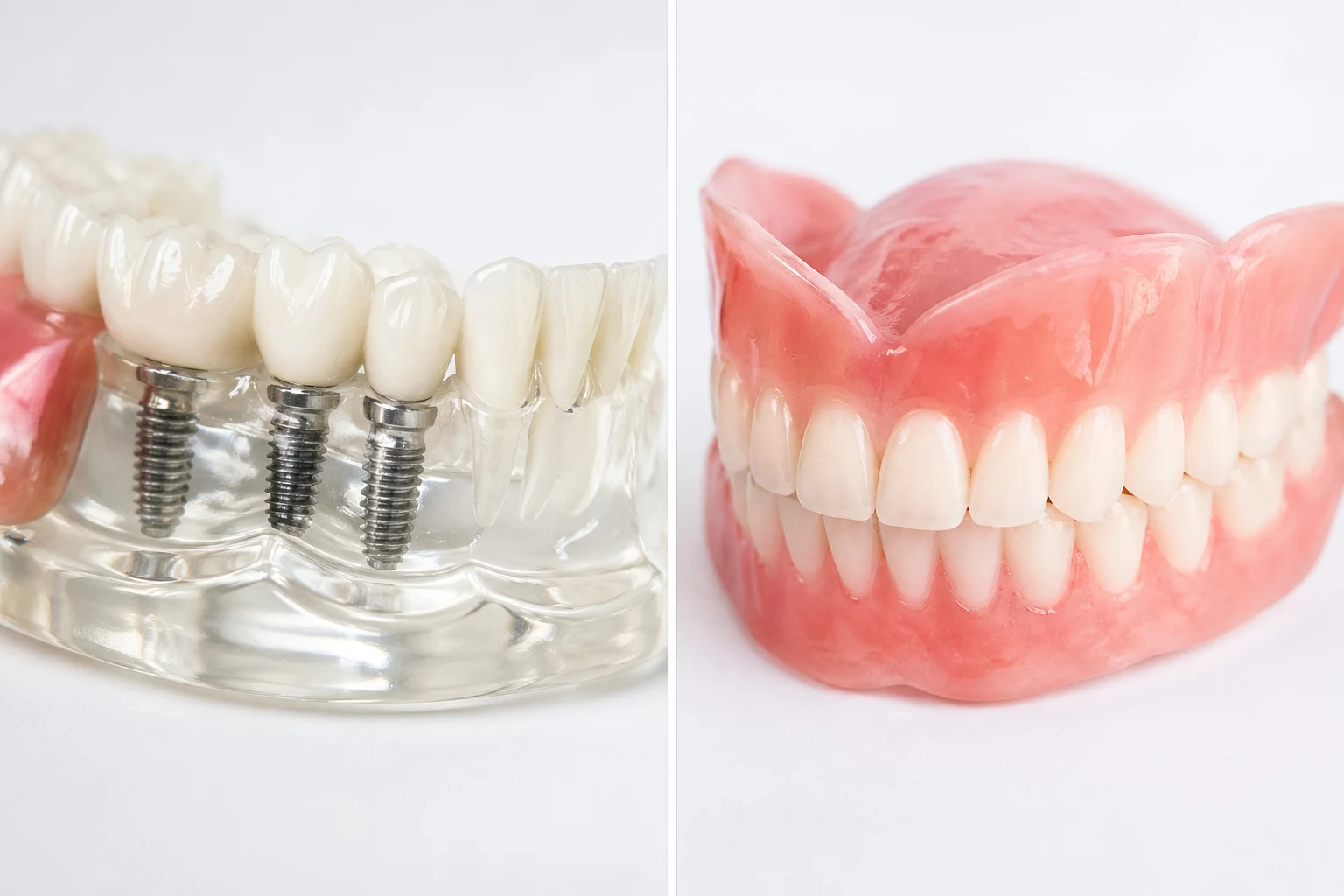
If you're considering dental implants, one of the first questions you'll have is whether they're actually an option for you. The short answer is that most healthy adults with sufficient bone are suitable candidates — but there are several factors a dentist will assess before recommending treatment. This guide explains what makes a good candidate, what can complicate things, and what can be done if you fall into a grey area.
A strong candidate for dental implants typically has:
If you tick most of these boxes, you're likely a strong candidate. If some don't apply, it doesn't automatically mean implants are off the table — it means more needs to be assessed at your consultation.
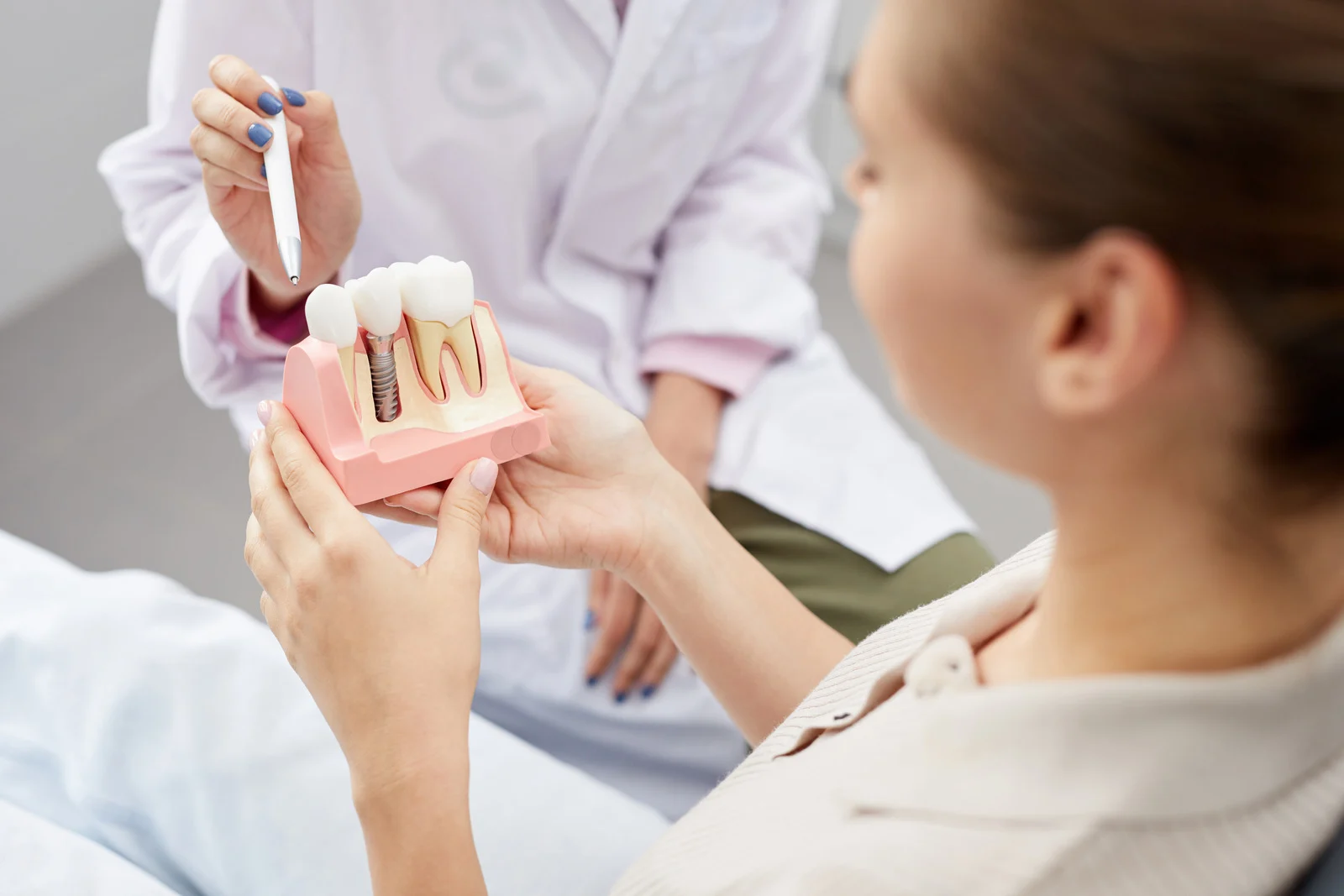
Bone density is one of the most important factors in implant success. An implant is a titanium post placed directly into the jawbone; it relies on bone fusing around it — a process called osseointegration — to create a stable foundation for the replacement tooth.
When a tooth is lost, the bone in that area begins to shrink over time. This is why acting sooner rather than later generally gives better outcomes. However, even if you have had missing teeth for years, implants may still be possible.
Procedures such as bone augmentation (from £550) and sinus lifts (from £995) can rebuild bone volume where it has reduced, making implants viable for patients who might otherwise be told they are not suitable. Both are available at Limes Dental Practice and would be identified and costed as part of your treatment plan if needed.
Active gum disease (periodontitis) is one of the few genuine contraindications for dental implants. Placing an implant into a mouth with untreated gum disease significantly raises the risk of failure through a condition called peri-implantitis — an infection of the tissue and bone around the implant.
Crucially, gum disease needs to be treated before implant placement, not instead of it. Once your gum health is stable, implants can usually proceed. At your consultation, the clinical team will assess gum health and recommend any necessary treatment first.
Most medical conditions do not automatically disqualify you from dental implants, but some require careful assessment.
Diabetes: Well-controlled diabetes is generally compatible with implant treatment. Uncontrolled diabetes can impair healing and increase infection risk — your blood sugar management will be discussed at consultation.
Osteoporosis and bisphosphonate medications: Bisphosphonate medications, commonly prescribed for osteoporosis, can in some cases affect jawbone healing and must be disclosed at consultation. (Flag: Andrew to review this section specifically.)
Autoimmune conditions and immunosuppressants: These may affect healing but require assessment rather than automatic exclusion.
Blood-thinning medications: Anticoagulants such as warfarin are relevant as implant surgery is a surgical procedure. Your dentist will advise on how this is managed.
None of these factors are necessarily a barrier — but they must be declared and factored into your treatment plan.
Smoking restricts blood flow to the gums and bone, which impairs healing and increases the risk of both short-term complications and longer-term implant failure. Patients who smoke are strongly advised to stop around the time of surgery, and ideally long-term.
Patients who are committed to stopping smoking typically achieve outcomes much closer to those of non-smokers. Your dentist will discuss this at consultation.
There is a lower age limit: implants are generally not placed until jaw development is complete, which is typically around 18 years old. There is no upper age limit. Patients in their 70s and 80s can be excellent candidates, provided their general health allows.
Age alone is not a disqualifying factor.
At your initial consultation with Dr Andrew Connolly, you can expect:
This assessment is what gives you a definitive answer about your candidacy — and exactly what treatment would involve.
Ready to find out if dental implants are the right option for you? Book a consultation at Limes Dental Practice in Gloucester.