Reviewed by Dr Andrew Connolly BDS MSc Implant Dent, Principal Dental Surgeon · Limes Dental Practice · April 2025
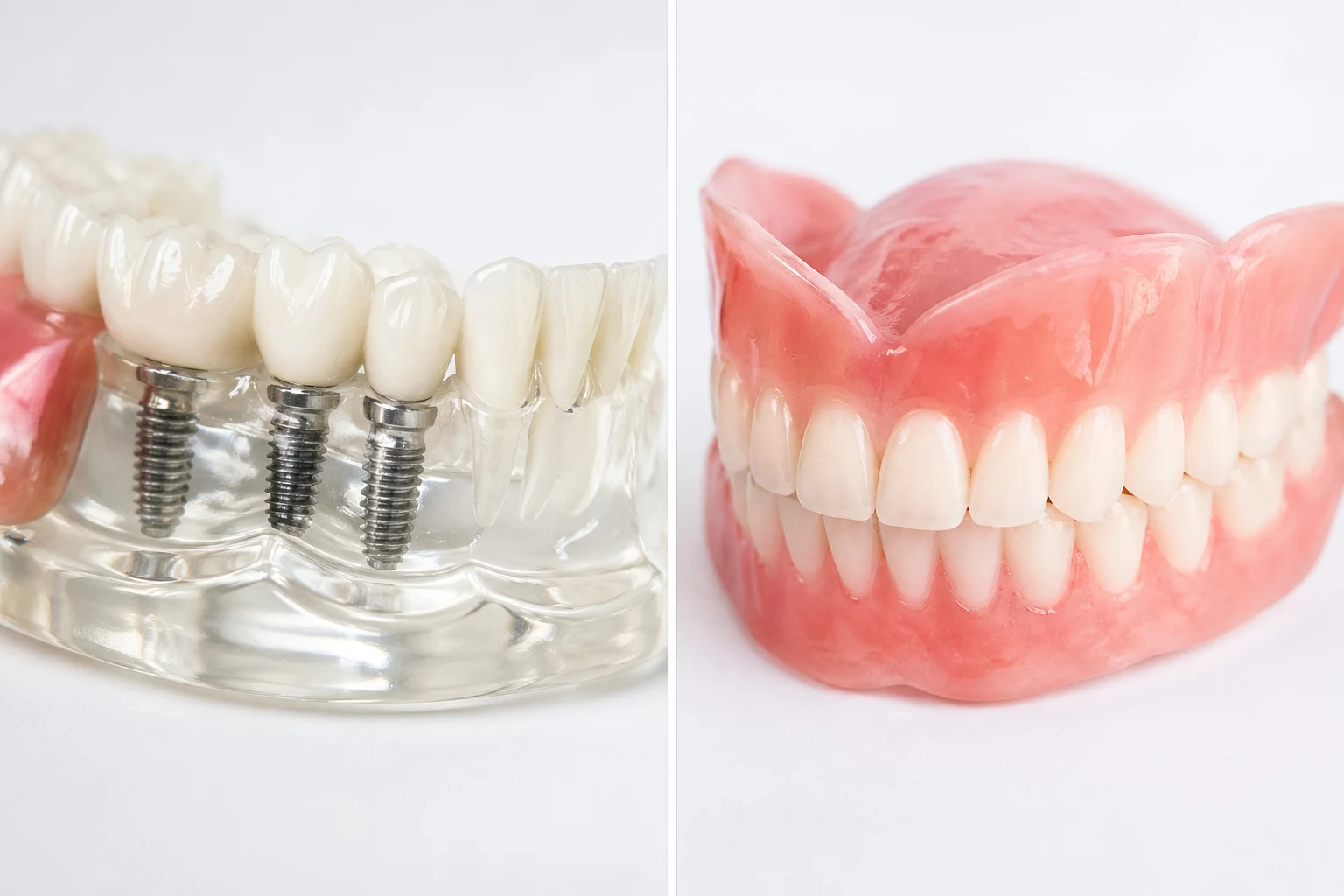
The right choice depends on three things: your budget, your long-term goals, and your current oral health.
Dentures are a proven, removable solution that can replace several teeth at once without surgery. They're often the fastest way to restore your smile and chewing ability.
Dental implants are a fixed, long-term solution. They feel and function like natural teeth and help maintain jawbone health over time.
Both are valid options. If you want a solution that stays in place and you're planning 10–20 years ahead, implants are often preferred. If you want a non-surgical route or need multiple teeth replaced quickly, dentures can be the right choice. Here's how they compare.
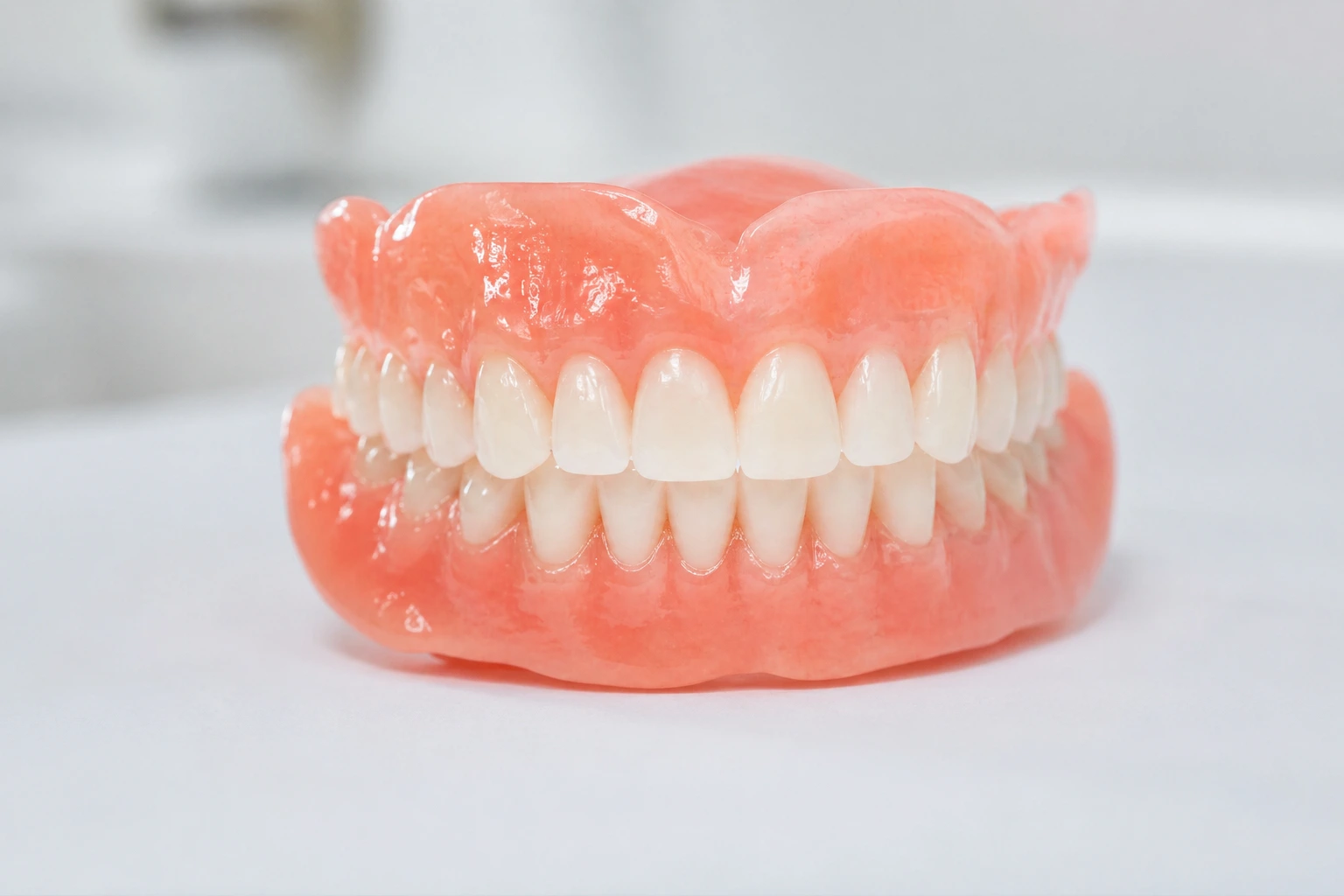
Dentures are removable prosthetic teeth set in an acrylic or metal base, custom-made to fit your mouth. They can replace several missing teeth or a full arch.
They're a well-established treatment that restores your smile, speech, and ability to eat a varied diet. Patients typically choose dentures when they prefer a non-surgical option, need multiple teeth replaced in one go, or want to manage upfront costs.
Pricing at Limes Dental Practice: Full or partial dentures typically range from £475 – £995 depending on materials and complexity.
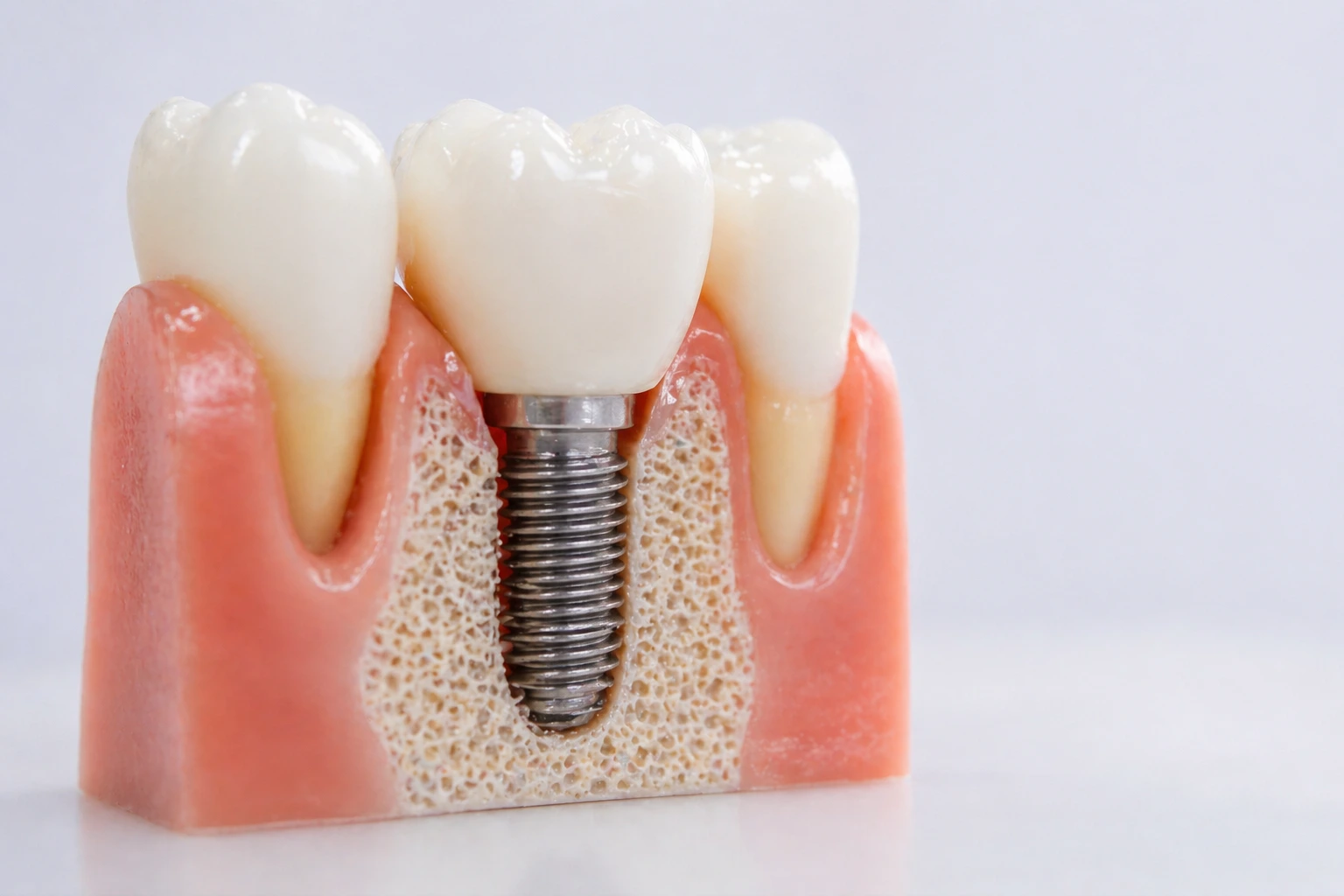
Dental implant showing titanium post and ceramic crown
Dental implants use a titanium post placed in the jawbone to act as an artificial tooth root, topped with a custom crown.
Because they’re fixed in place and fuse with your bone, implants look, feel, and work like natural teeth. They’re the only tooth replacement that directly integrates with the jawbone.
AA dental implant uses a titanium post placed in the jawbone to act as an artificial tooth root, topped with a custom crown. Because they're fixed in place and fuse with your bone, implants look, feel, and work like natural teeth. They're the only tooth replacement that directly integrates with the jawbone — which is why they're considered the gold standard in modern restorative dentistry.
Pricing at Limes Dental Practice: A single dental implant starts from £995, with the final crown from £895 per unit. We'll give you a full personalised quote at your consultation.
For a full breakdown, visit our fees page or speak to our team at your consultation.
Pros: More affordable upfront, no surgery required, can replace multiple teeth at once, treatment usually completed in 2–5 weeks, easily adjusted if your mouth changes over time.
Cons: Need to be removed for cleaning, may require periodic relines as your mouth changes shape, typically replaced every 5–8 years.
Pros: Fixed in place with no removal needed, excellent bite strength and stability, helps maintain jawbone, long-term solution, doesn't affect neighbouring teeth.
Cons: Higher initial cost, requires a minor surgical procedure, treatment takes 3–6 months to allow proper bone integration, requires sufficient bone density.
Dentures have a lower initial cost. Ongoing costs can include relines, adjustments, cleaning products, and periodic replacement every 5–8 years as part of normal wear.
Implants require a higher initial investment. Because they're designed to last for decades with proper care, the cost per year over a lifetime is often lower. There are no adhesives, no daily removal routines, and no adhesive products to budget for.
For patients in their 40s, 50s, or 60s thinking about the long term, implants frequently represent stronger lifetime value. For patients who want to keep upfront costs lower or aren't suitable for surgery, dentures remain a strong solution.
Finance options may be available to help spread the cost of implants. Ask our team during your consultation.
Dentures may suit you if:
Implants may suit you if:
For patients who are clinically suitable, implants are widely regarded as the gold standard for tooth replacement. That said, modern dentures still allow many patients to eat, speak, and smile with confidence — and for the right patient, they're an excellent choice.
The procedure is done under local anaesthetic. Most patients report less discomfort than a tooth extraction. You’ll have mild soreness for a few days, managed with normal painkillers.
With good oral hygiene and regular check-ups, dental implants often last 15–25+ years. The titanium implant post can last a lifetime, while the crown may need replacing after 10–15 years, similar to a natural tooth crown.
Yes. Many patients upgrade from dentures to implant-retained dentures or full implants. We’ll assess your bone levels to check suitability during a consultation.
Dentures: 2–5 weeks. Implants: 3–6 months to allow proper bone integration. We also offer same-day implant options for suitable cases.
There’s an adjustment period. Most patients eat comfortably once they’re used to them. We’ll advise on foods to start with and give tips to help you adapt.

At Limes Dental Practice, we've helped patients from Gloucester, Churchdown, Quedgeley, Stroud, Stonehouse, and across Gloucestershire restore their smiles — from single missing teeth to more complex full-mouth cases.
Because we offer both treatments in-house, you'll receive an honest, unbiased recommendation based on what will work best for your long-term oral health. Dr Connolly and the team will assess your bone levels, gum health, and bite to give you a tailored treatment plan with clear pricing from the start.
The most reliable way to choose between dentures and implants is with a clinical assessment. We'll check your suitability for both options, explain all costs upfront, and show you what your results could look like.