Reviewed by Dr Andrew Connolly BDS MSc Implant Dent, Principal Dental Surgeon · Limes Dental Practice · September 2026

Most advice about diet and teeth comes as a list — avoid this, limit that — without explaining why some foods matter more than others, or what actually happens inside your mouth when you eat them. Understanding the three distinct ways food damages teeth makes it much easier to make sensible choices, rather than trying to memorise an endless list of banned snacks.
Nearly everything that harms teeth falls into one of three categories: it feeds the bacteria that cause decay, it erodes enamel with acid, or it physically fractures teeth through hardness or force. Most damaging foods do more than one of these at once.
Sugar itself doesn't damage teeth directly. The damage comes from what happens after you eat it. Bacteria naturally living in your mouth feed on sugar and, as a by-product, produce acid. That acid is what attacks tooth enamel, gradually breaking down its mineral structure and eventually causing a cavity if it isn't stopped.
This is why how long sugar stays in contact with your teeth matters more than the total amount you eat in a day. A sticky sweet that clings to the grooves of your teeth for an hour causes more sustained acid production than the same amount of sugar consumed quickly with a meal and then rinsed away by saliva. Gummy sweets, toffee, dried fruit, and anything that lingers are worse for this exact reason — not because they contain more sugar, but because they stay in contact with teeth for longer.
Frequency matters just as much as duration. Grazing on sugary snacks or sipping a sugary drink slowly throughout the day keeps your mouth in an acid-producing cycle almost continuously, giving enamel very little recovery time between exposures.
Separate from bacteria and sugar entirely, some foods and drinks are acidic enough to erode enamel on contact — no bacterial involvement needed. Citrus fruits, fruit juices, fizzy drinks (including diet versions), and wine all fall into this category.
Enamel is the hardest substance in the human body, but it isn't immune to acid. Frequent exposure gradually softens and wears it down, and unlike other tissues, enamel doesn't regenerate once it's lost. This is why acid erosion is a genuinely permanent form of damage in a way that early-stage decay sometimes isn't.
One detail worth knowing: brushing immediately after eating or drinking something acidic can actually make erosion worse, not better. Acid temporarily softens the enamel surface, and brushing while it's in this softened state can wear it away more easily. Waiting around 30 minutes allows saliva to naturally neutralise the acid and help the enamel re-harden before you brush.
The third category has nothing to do with chemistry — it's simple mechanical force. Ice, unpopped popcorn kernels, hard sweets, and biting down on things like pen lids or fingernails can chip, crack, or fracture teeth outright, particularly if a tooth is already weakened by an old filling or decay.
This kind of damage is unpredictable — it depends on exactly how and where the force lands — which is part of why it's worth avoiding these habits altogether rather than assuming your teeth are strong enough to handle them. A cracked tooth doesn't always announce itself with immediate pain, and by the time it does, treatment is often more involved than it would have been if the crack had never happened.
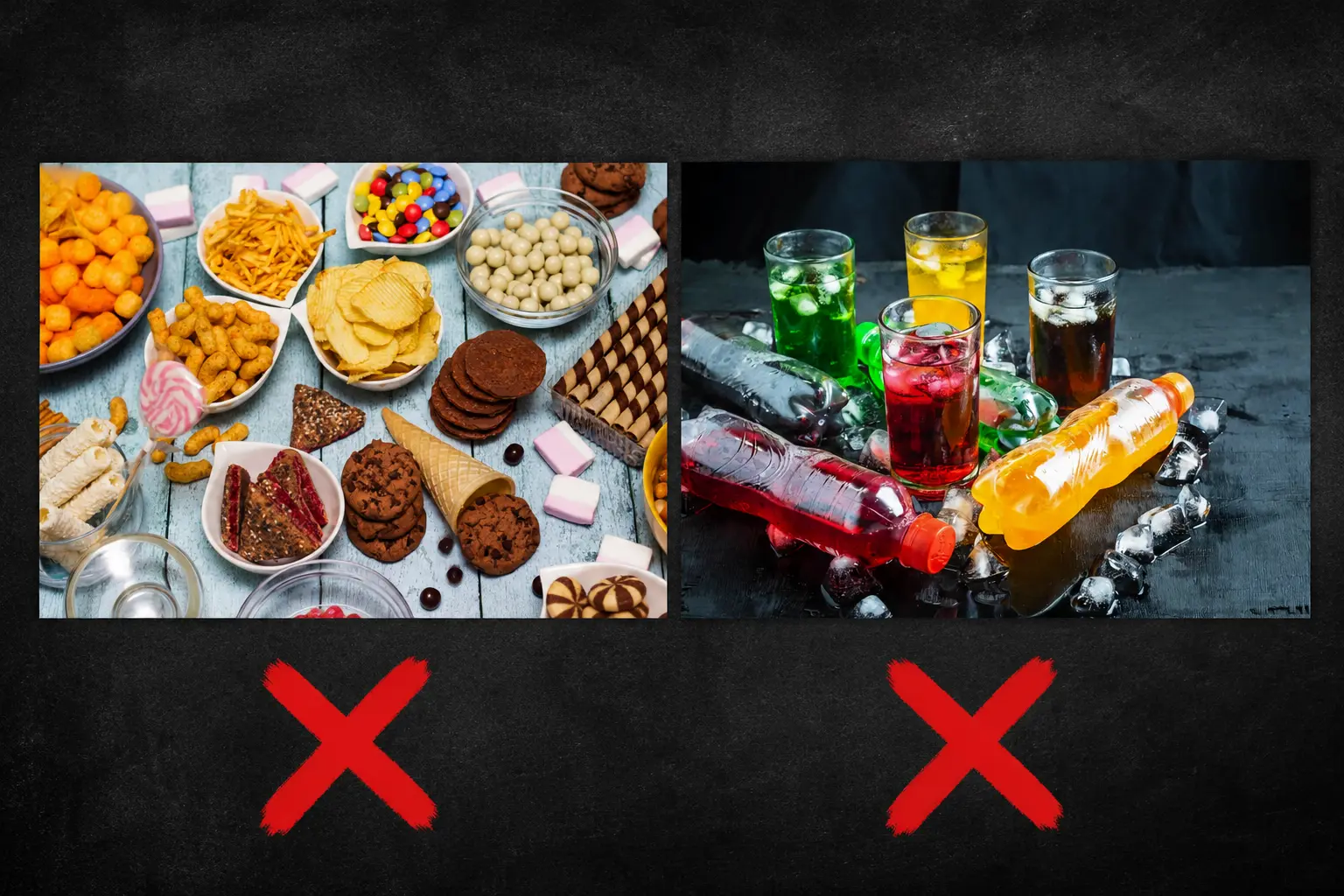
Bringing the three mechanisms together, a handful of everyday items are worth particular attention:
Sticky sweets and dried fruit — prolonged sugar contact time makes these worse than their sugar content alone would suggest.
Fizzy drinks, including diet versions — the acidity causes erosion independently of the sugar content, so "diet" doesn't mean "safe" for enamel.
Citrus fruit and juice — genuinely healthy in many respects, but worth having with a meal rather than sipped alone, and followed by plain water rather than an immediate brush.
Ice and hard sweets — no nutritional benefit at all, and a disproportionate mechanical risk relative to that.
Frequent snacking or grazing — even on foods that aren't especially damaging individually, constant exposure keeps your mouth in a near-permanent acid cycle.
None of this means eliminating these foods entirely — moderation and timing matter far more than total avoidance for most people.
Eat sugary or acidic foods alongside a meal rather than as a standalone snack, since saliva production during eating helps buffer some of the acid. Drink water after anything acidic or sugary rather than brushing immediately. Use a straw for acidic or sugary drinks where practical, to reduce direct contact with teeth. Choose water over fizzy drinks and juice for everyday hydration. Save very hard foods for cutting into smaller pieces rather than biting directly, and avoid using teeth as tools altogether.
Cheese, plain yoghurt, nuts and crunchy vegetables are genuinely good choices in comparison — they don't feed decay-causing bacteria in the same way, and some (cheese in particular) can help neutralise acid in the mouth after eating.
Even a careful diet doesn't replace regular professional care. Hygiene visits remove the plaque and tartar that daily brushing can't fully reach, and regular check-ups catch early erosion or decay while it's still simple to manage — often well before it would cause any noticeable symptoms.
If a tooth has already been affected by decay, tooth fillings remain a straightforward, minimally invasive way to restore it. For enamel that's become visibly discoloured from years of staining foods and drinks, professional teeth whitening is a separate consideration worth discussing at a check-up. And if a hard food does cause a chip or fracture, that falls under emergency dentistry — the sooner it's looked at, the simpler the fix tends to be.
Understanding why certain foods damage teeth — rather than just which ones to avoid — makes it much easier to make sensible everyday choices without feeling like you're following an endless list of rules. Pair sensible eating habits with regular dental visits, and most diet-related damage is genuinely preventable.
Book a check-up with the team at Limes Dental Practice to have your teeth properly assessed. We see patients from Gloucester, Churchdown, Quedgeley, Stroud, Stonehouse and across Gloucestershire.