Is teeth whitening safe? Done properly, by a dentist, using gels at regulated concentrations, the answer is yes for most people. Done with strong supermarket kits, salon "whitening sessions," or unverified TikTok products, the answer can be a different story.
This guide explains the actual risks, the side effects to expect, and why a dentist-supervised approach is the standard we recommend at The Limes Dental Practice.
Tooth whitening using carbamide peroxide or hydrogen peroxide gels has been studied for decades. When the product is prescribed by a dentist, fitted to your mouth, and used at the correct strength for the correct length of time, the most common side effects are mild, temporary tooth sensitivity and slight gum irritation. Both usually settle within a few days of finishing treatment.
The risks rise sharply when whitening is carried out by anyone who is not a registered dentist, or when over-the-counter and online products use uncontrolled concentrations. Under UK law, only a General Dental Council registered dentist (or a dental therapist or hygienist working to a dentist's prescription) can legally provide whitening with gels stronger than 0.1% hydrogen peroxide. You can read the official GDC patient guidance for more on these regulations.
Whitening works because the active ingredient (carbamide peroxide or hydrogen peroxide) breaks down stains within the enamel. The gel does not strip the surface or "scrub" the tooth. Instead, it reaches the molecules causing discolouration and oxidises them, leaving the tooth structure intact.
Two concentrations matter:
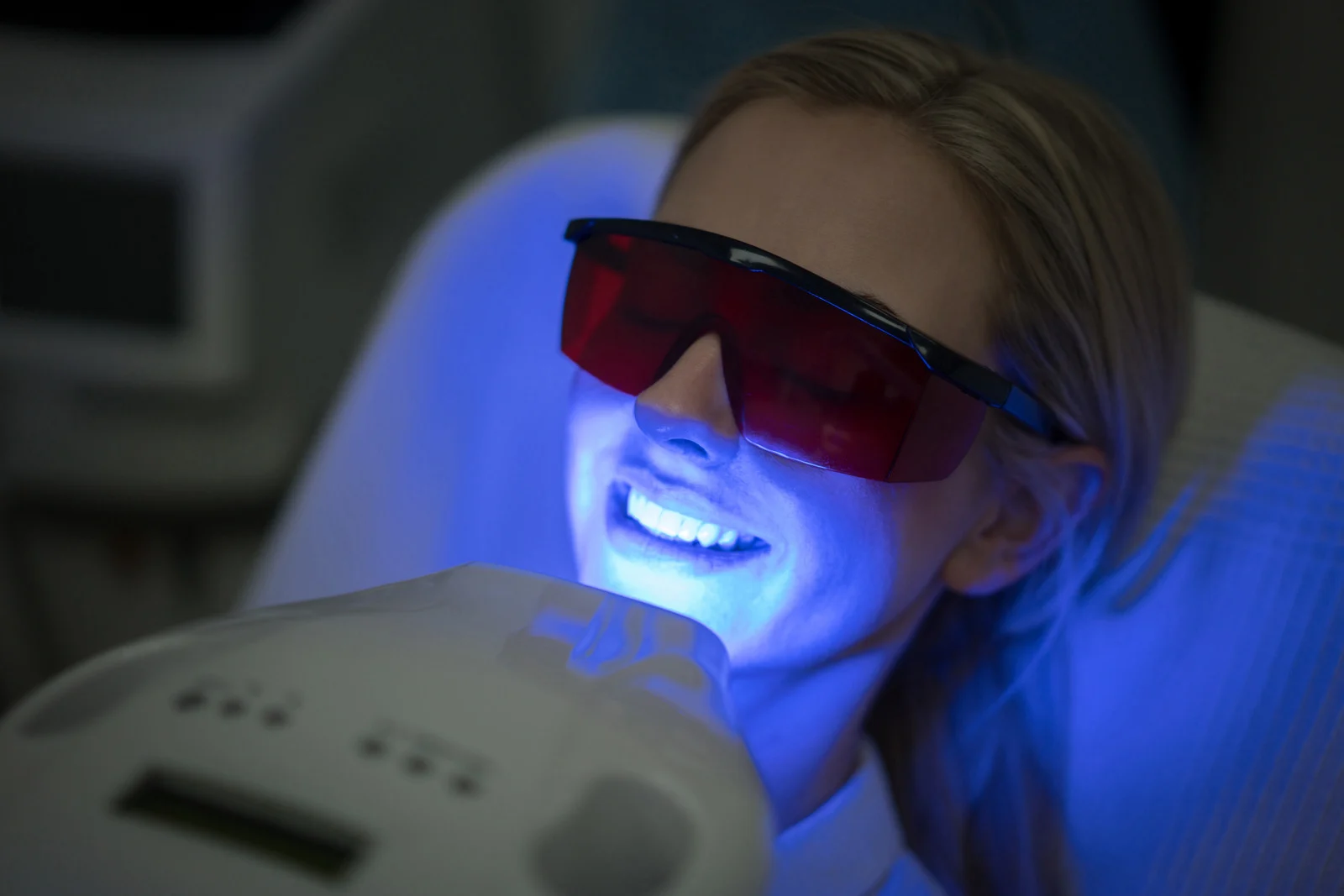
At The Limes, we use both, depending on what suits the patient. Our professional teeth whitening at The Limes page goes into the systems we offer in more detail.
The most common side effect is short-term sensitivity to cold. Studies show roughly half of patients on a two-week course of 10% carbamide peroxide experience some sensitivity, almost all of which resolves once the course finishes. We mitigate this with desensitising toothpastes, lower-concentration gels, and shorter wear times for sensitive patients.
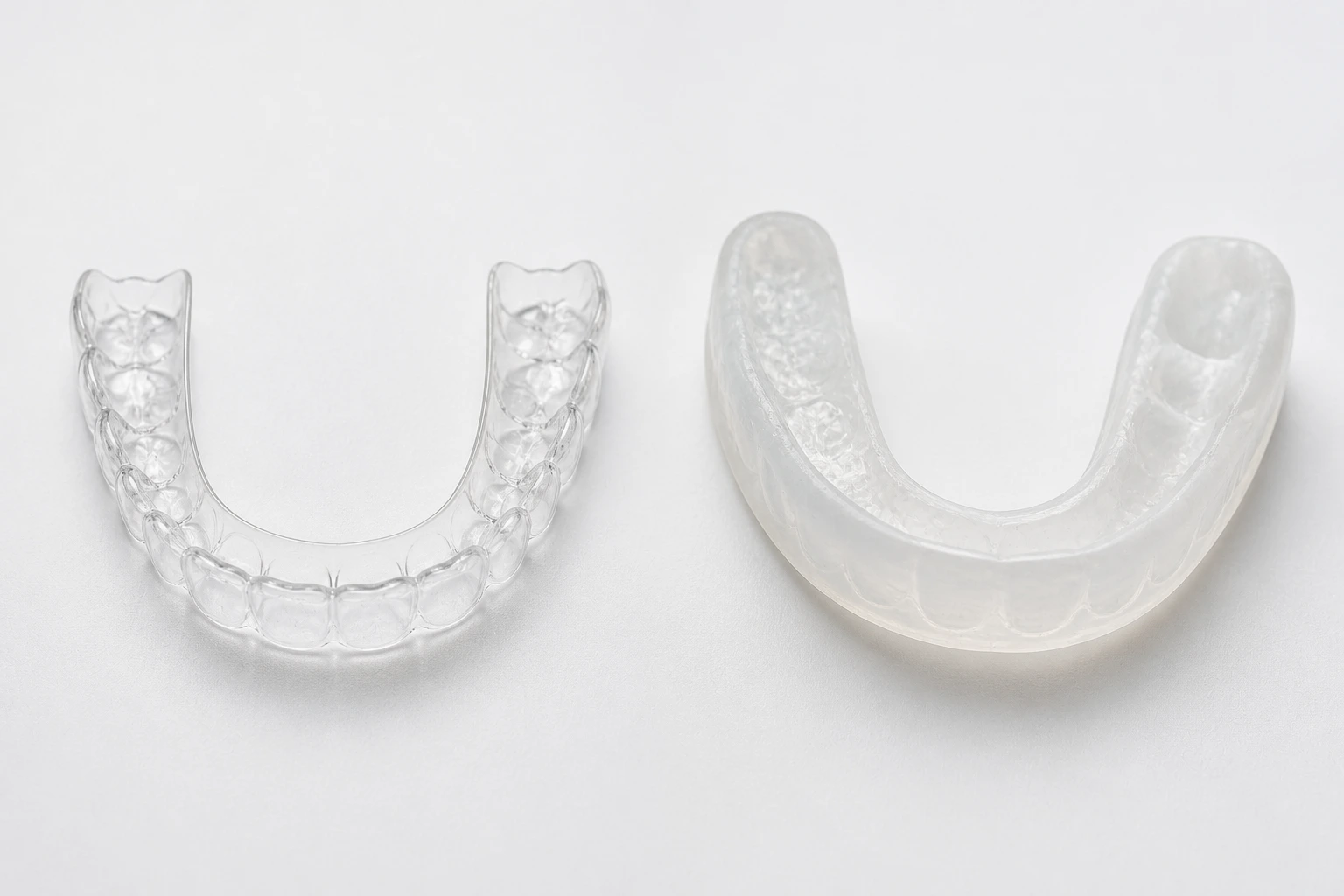
If gel touches the gums, it can cause a temporary white patch and mild soreness. This is why a custom tray that hugs the gum line is so important.
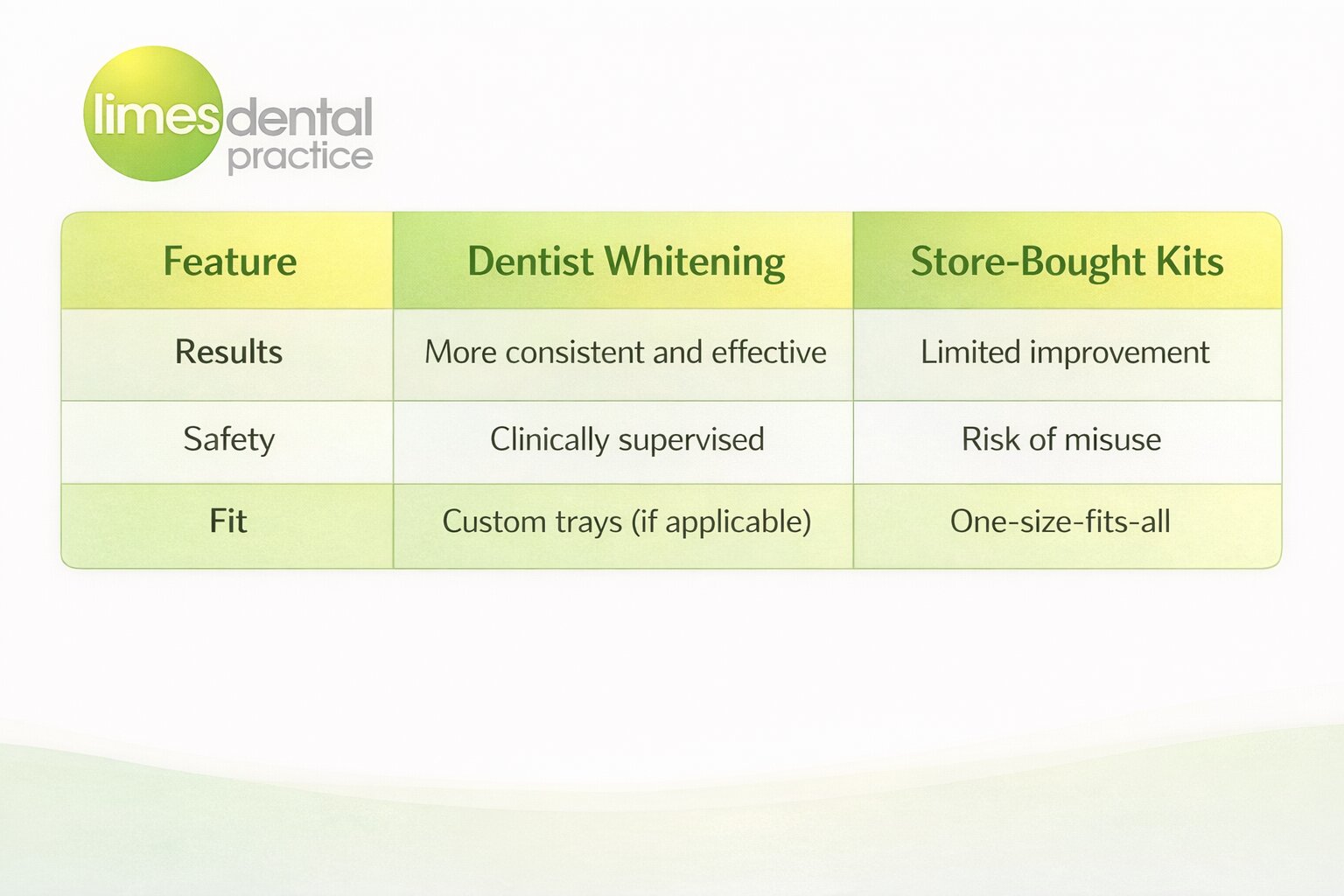
Stock trays sold in chemists and online rarely fit precisely, and that is one of the main reasons people end up with sore gums.
Most rigorous reviews conclude that whitening at supervised concentrations does not cause clinically significant enamel damage. Higher uncontrolled concentrations and very long exposures, however, can affect enamel surface integrity, which is one of the reasons UK law restricts what non-dentists can sell or use. The NHS teeth whitening guide confirms that whitening is safe when carried out by a dental professional.
Whitening gel only changes natural tooth structure. Existing fillings, dental veneers, and crowns do not lighten. If you have visible restorations on front teeth, your dentist should plan for this before whitening, or you may end up with a noticeable mismatch. In some cases, patients choose to refresh their restorations with composite bonding after whitening to match their new shade. Our blog on the five main ways to whiten teeth covers what to do in those cases.
Whitening is not recommended during pregnancy or breastfeeding, and it is not appropriate if you have active decay, untreated gum disease, or large untreated cracks. A dentist's exam catches all of those before any gel is prescribed.
You may have seen whitening offered at beauty salons, brow bars, or hair studios. In the UK, anyone offering whitening with peroxide gels without GDC registration is breaking the law. The products they use are sometimes either underpowered (so you get nothing) or overpowered and unregulated (so you risk burns).
Online "PAP" whitening kits are a separate category. They typically use phthalimidoperoxycaproic acid instead of peroxide. Independent evidence on their effectiveness is mixed and they are not subject to the same strict dental regulation. The practical risk of DIY whitening is that nobody is checking the health of your mouth before you start. Whitening on top of an undiagnosed crack or active cavity can turn a cosmetic treatment into a clinical problem.
Patients sometimes ask what they actually get for the higher cost of dentist-led whitening. The answer includes:
You can read our complete guide to teeth whitening in Gloucester for the practical side, including timelines and costs.
Multiple long-term reviews suggest dentist-supervised whitening at standard concentrations does not cause lasting harm to enamel or dentine.
Supervised whitening at regulated concentrations is not associated with clinically significant enamel damage. Uncontrolled high-concentration products found online are a different matter entirely.
Permanent sensitivity is rare. The vast majority of patients find sensitivity resolves within a few days of finishing treatment.
Over-the-counter kits in the UK are restricted to 0.1% hydrogen peroxide, which is safe but often too low to deliver noticeable results.
A custom tray system from a GDC-registered dentist, using 10% to 16% carbamide peroxide, is the most studied and predictable option.
If you have been thinking about whitening but you are unsure whether it is safe for your teeth, the answer starts with a conversation. We will examine your mouth, talk you through the options, and only recommend whitening if it is right for you.
Book online or call 01452 523089. The Limes Dental Practice, 168 Stroud Road, Gloucester GL1 5JX.
Reviewed by Dr Andrew Connolly, BDS MSc Implant Dent, Principal Dentist at The Limes Dental Practice.