Reviewed by Dr Andrew Connolly BDS MSc Implant Dent, Principal Dental Surgeon · Limes Dental Practice · November 2026
If you have researched teeth whitening, you will have seen two names again and again: carbamide peroxide and hydrogen peroxide. They sound similar, and both are used in professional gels. So what is the difference, and does it matter which one you use?
Both are bleaching agents. Hydrogen peroxide is the active ingredient that actually lightens the tooth. Carbamide peroxide is a compound that breaks down into hydrogen peroxide and urea when it touches saliva.
Roughly speaking, a carbamide gel releases about a third of its strength as hydrogen peroxide. That means a 16% carbamide gel is closer to a 5 to 6% hydrogen peroxide gel in effect. This is why you cannot compare the percentages on the labels directly.
Hydrogen peroxide acts quickly. It releases its whitening effect fast, which is why it is used in shorter treatments.
Carbamide peroxide releases more slowly and steadily over several hours. That makes it well suited to wearing in a tray overnight or for longer periods.
The speed is a difference of pace, not of final result. Both can reach a similar level of whiteness, one over a shorter session and the other over a longer one.
Either can cause sensitivity, and it often comes down to gel strength, how long the gel is on the teeth and how well the tray fits. A slow-release gel in a well-fitted tray tends to feel gentler for many people. If you already have sensitive teeth, tell your dentist so the plan can be adjusted. We cover the risks in more detail in our guide on whether professional whitening is safe.
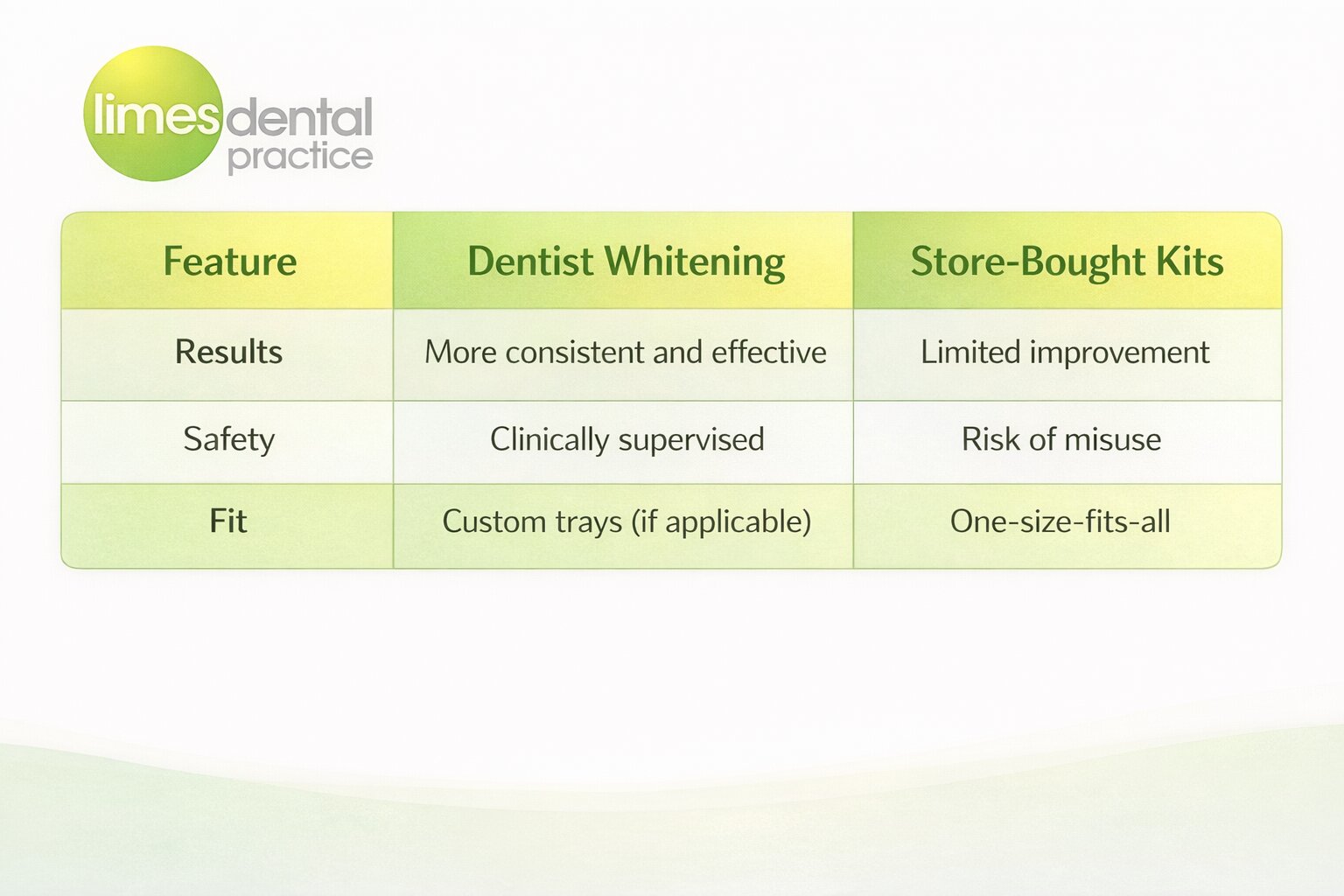
Strong whitening gels are regulated. In the UK, products sold to the public can contain only a very small amount of hydrogen peroxide. Stronger gels, up to a set limit, can only be supplied by a registered dentist after an examination. This is why shop kits and salon treatments are limited, and why a dentist-supplied gel can work more effectively. The NHS page on teeth whitening explains the rules for patients.
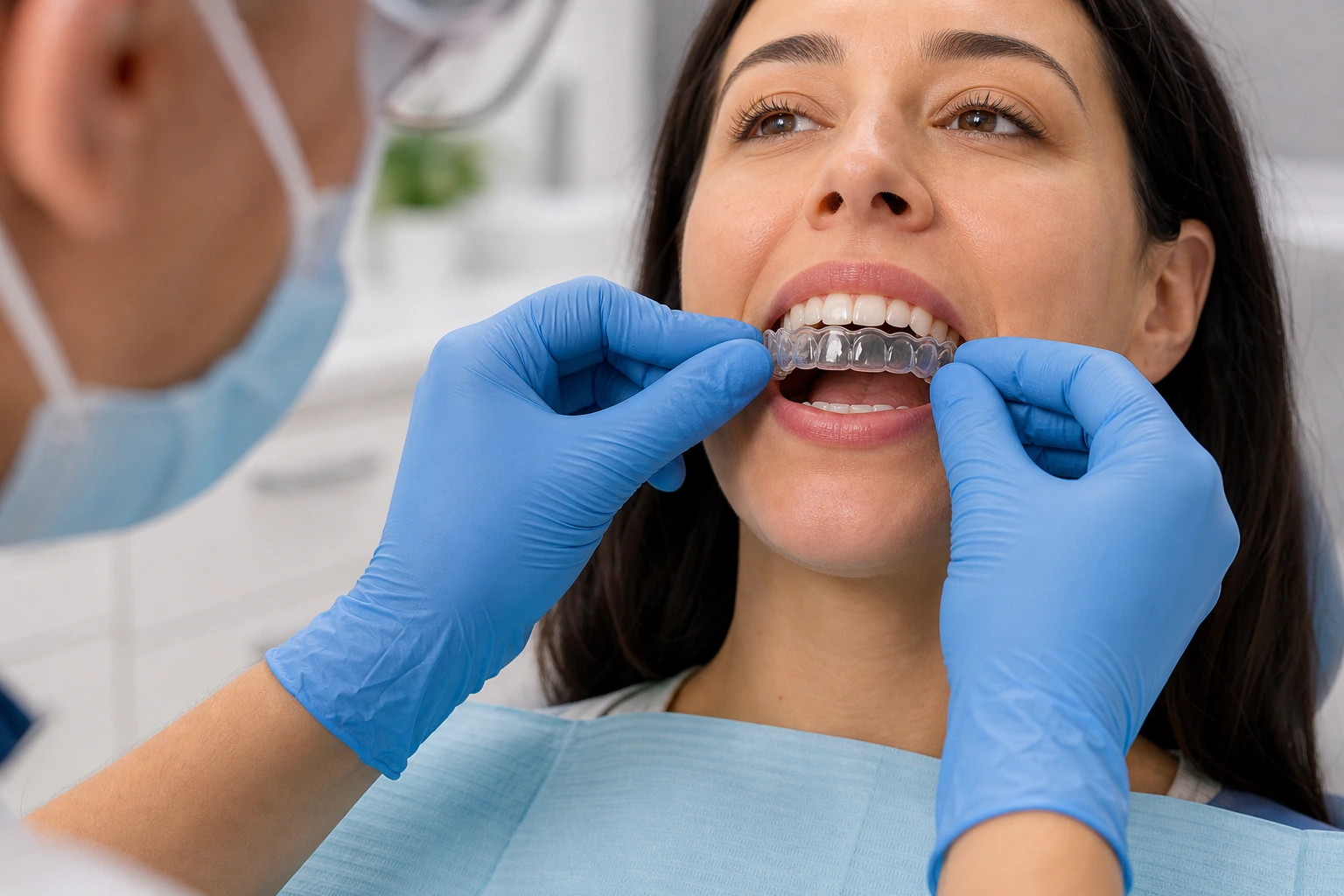
Our preferred method is dentist-supervised whitening with custom-fitted trays. This uses a carbamide peroxide gel at up to 16%, worn over several weeks, with check-ins along the way. A close-fitting tray keeps the gel on your teeth and away from your gums, which helps comfort and control. You can read more about teeth whitening at Limes.
It depends on what you want.
Remember too that whitening only changes natural tooth colour. It will not change the shade of crowns, veneers or bonding, so your dentist will check this before starting.
Not in a meaningful way. How long your results last depends more on your diet, habits and top-up care than on which gel you used. Our guide on how long whitening lasts explains what to expect.
A short examination will tell you which approach suits your teeth. We check that your teeth and gums are healthy, discuss your goals and give you a written estimate before treatment. You can book a whitening consultation with us in Gloucester.