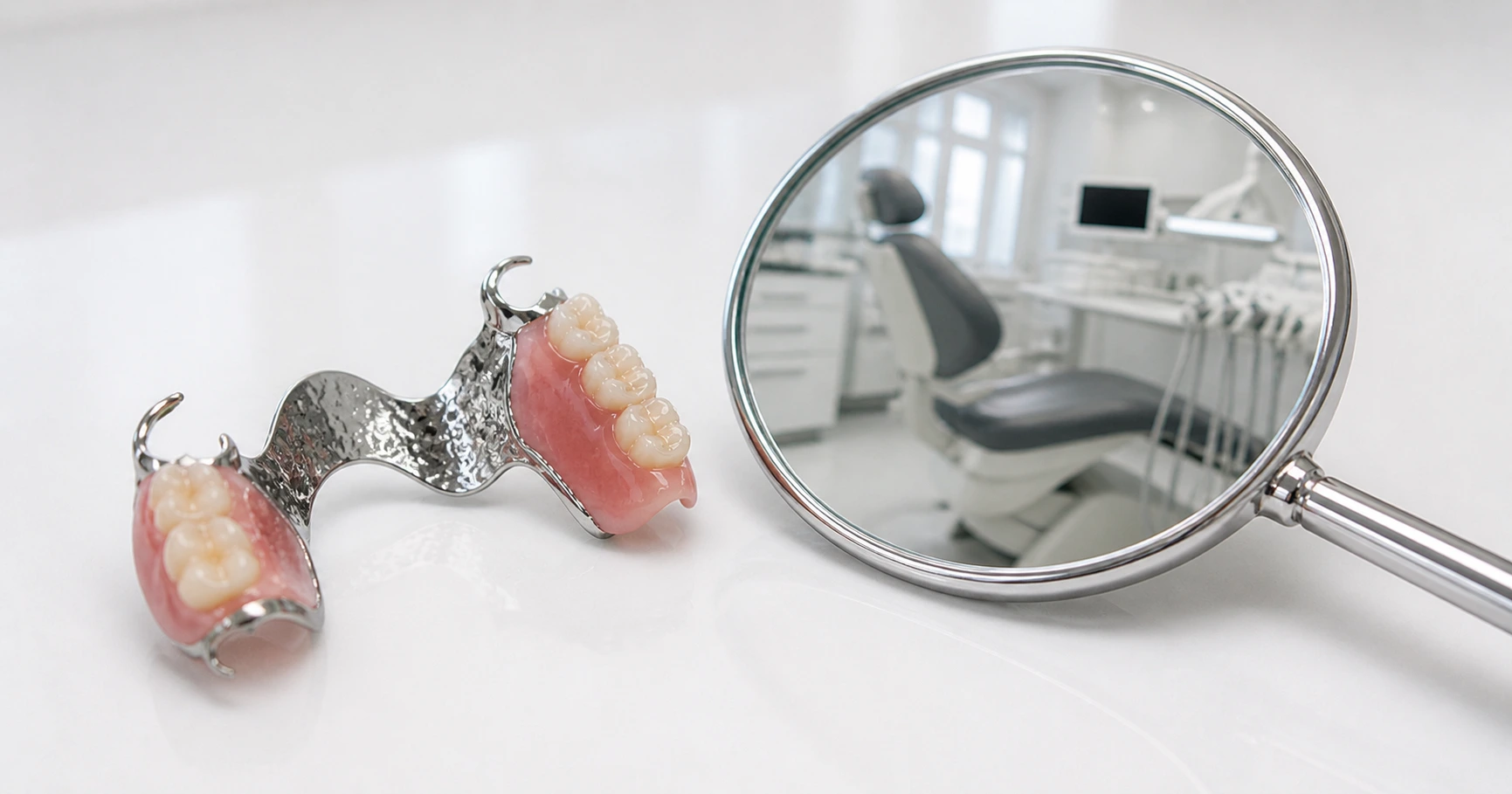
Traditional dentures are a proven solution for replacing multiple missing teeth, but they come with well-known limitations — movement during eating and speaking, reliance on adhesive, and a gradual change in fit as the jawbone changes shape over time. Implant-supported dentures use dental implants to anchor the prosthesis securely in place, addressing many of these drawbacks. This guide explains how they work, who they suit, and what to expect at Limes Dental Practice.
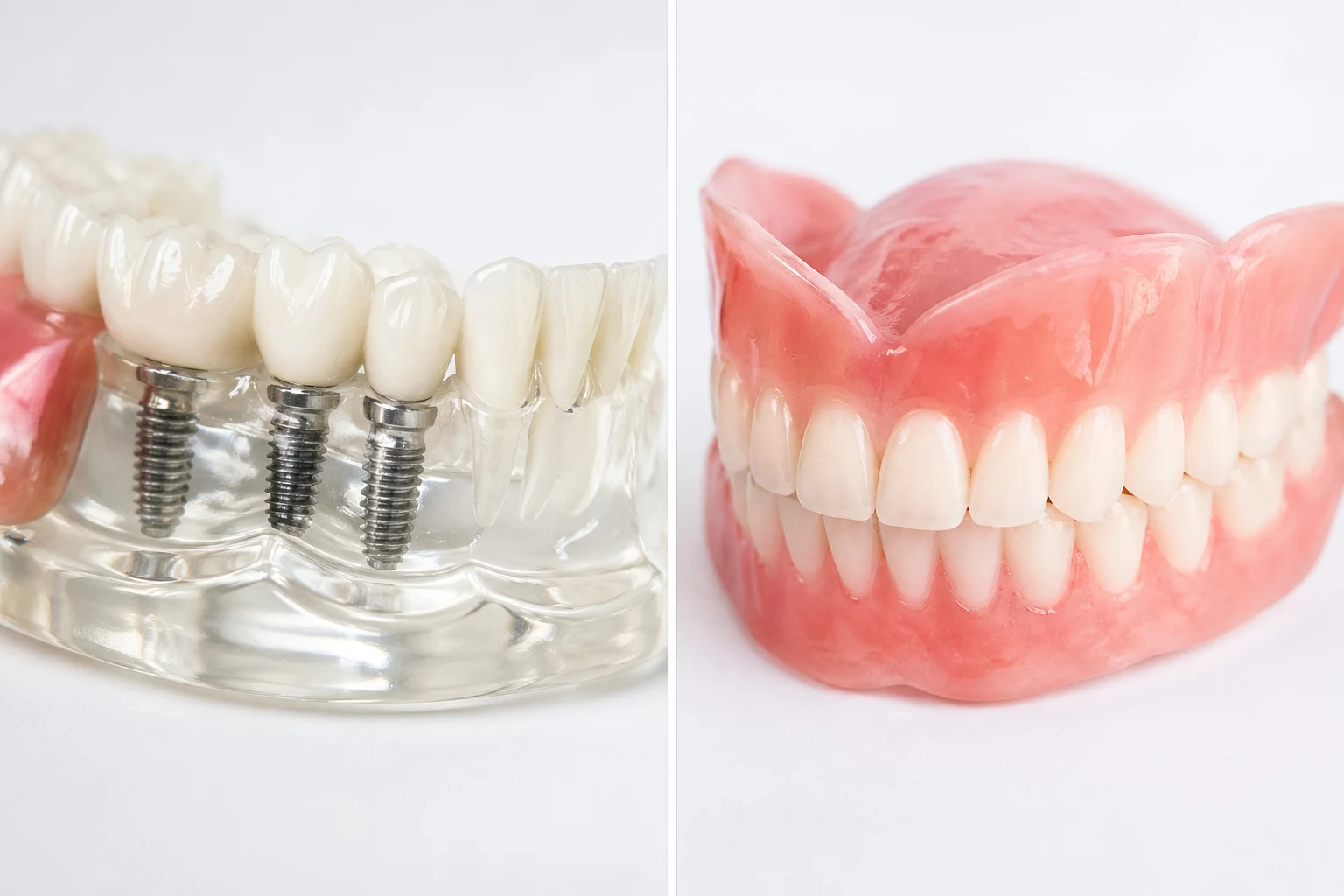
Implant-supported dentures are a type of full or near-full tooth replacement that combines the coverage of a traditional denture with the stability of dental implants. Instead of resting on the gum or relying on suction and adhesive, the denture is attached to a small number of implant posts placed into the jawbone.
Because the denture is anchored to the bone, it cannot slip, shift or dislodge during normal use — one of the most common and frustrating complaints patients have with conventional dentures.
Traditional dentures sit on top of the gum and are held in place by suction, adhesive, or the natural contours of the mouth. Over time, as the jawbone gradually shrinks without teeth to stimulate it, the fit changes and dentures typically require relining or replacing.
Implant-supported dentures work differently:
There are two main approaches:
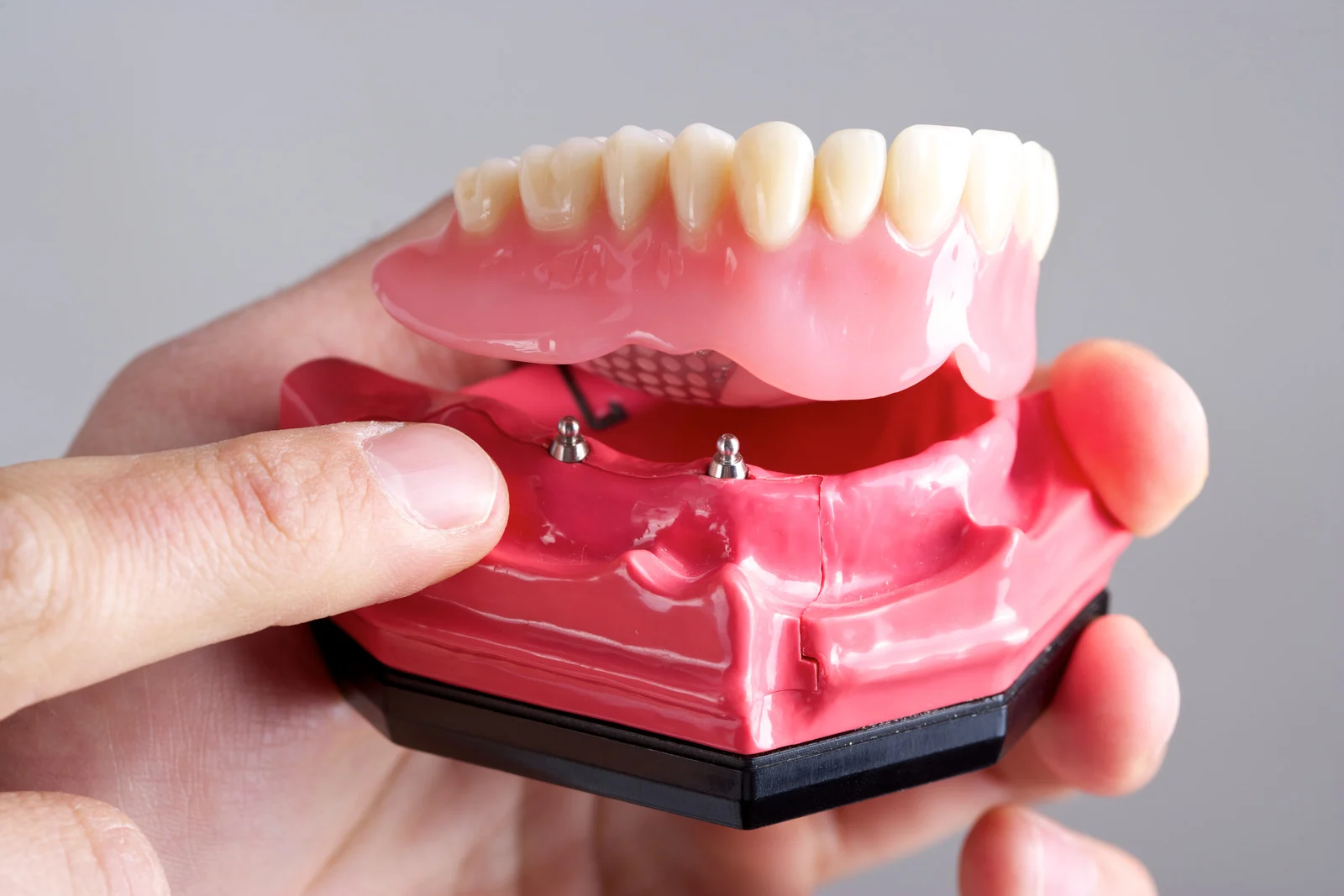
Removable implant-retained dentures clip onto implant attachments in the jaw and can be removed by the patient for cleaning. They require fewer implants — typically two to four in the lower jaw, and more in the upper — while still providing substantially more stability than a conventional denture.
Fixed implant-supported restorations are permanently attached to a greater number of implants and cannot be removed by the patient. They function most like natural teeth in everyday life and are generally the preferred option where bone volume and overall health allow.
The right approach for you depends on the number of teeth being replaced, available bone, and your clinical and lifestyle preferences — all of which are assessed at consultation.
There is no single answer. The number depends on:
This is established through a thorough clinical assessment at consultation, including X-rays or a CT scan to evaluate bone structure in detail.
The same general candidacy criteria apply as for single implants — good general health, sufficient bone volume (or the ability to rebuild it with bone augmentation), and gum health free from active infection.
Patients who already wear conventional dentures and find them uncomfortable, insecure or limiting in what they can eat are often the strongest candidates. Many describe implant-supported solutions as genuinely life-changing compared to their previous experience.
Treatment is staged over several months:
Consultation and planning — clinical examination, X-rays or CT scan, and a detailed treatment plan with all costs confirmed before anything proceeds.
Implant placement — surgical placement of the implant posts under local anaesthetic. Sedation is available for patients who prefer it.
Healing period — the jawbone fuses to the implants over several months. A temporary restoration is usually worn during this time.
Fitting the final restoration — once integration is confirmed, the final denture or fixed restoration is attached. Fit, function and appearance are all checked before completion.
As treatment involves multiple components — the number of implants placed, whether bone augmentation or a sinus lift is needed, and the type of final restoration — pricing is confirmed on an individual basis. A full itemised treatment plan will be provided at consultation — no treatment begins until every cost has been agreed in writing.
If you are struggling with loose or uncomfortable dentures, book a consultation at Limes Dental Practice in Gloucester to explore your options.
Reviewed by Dr Andrew Connolly BDS MSc Implant Dent, Principal Dental Surgeon · Limes Dental Practice · June 2026