Reviewed by Dr Andrew Connolly BDS MSc Implant Dent, Principal Dental Surgeon · Limes Dental Practice · September 2026

If you've lost a tooth some time ago, or you've been told you have gum disease, you may also have been told your jawbone has thinned. It's a common thing to hear at a consultation, and it can feel like the door to dental implants has just closed. It usually hasn't.
Bone loss is one of the most common reasons people assume they aren't suitable for implants. In our experience at Limes Dental Practice, it's rarely a straightforward no. It just means we need to look a little more closely at your jaw before deciding on the right way forward.
Your jawbone stays strong because your teeth put pressure on it every time you bite and chew. That pressure signals the bone to keep rebuilding itself. Once a tooth is gone, that stimulation stops, and the bone in that area starts to shrink — a process that can begin within months of losing the tooth and continues gradually if nothing replaces it.
Gum disease can cause the same effect from a different direction. Left untreated, it damages the bone and tissue holding your teeth in place, which is one of the reasons early treatment matters so much.
Either way, the result is the same: less bone volume in the area where an implant would normally sit.
Not on its own. An implant needs enough bone around it to stay stable long-term, but "enough" is relative to the individual case, not a fixed threshold that rules people in or out. Many patients we see with noticeable bone loss are still good candidates once we've properly assessed the area, sometimes straightforwardly, sometimes with an extra step first.
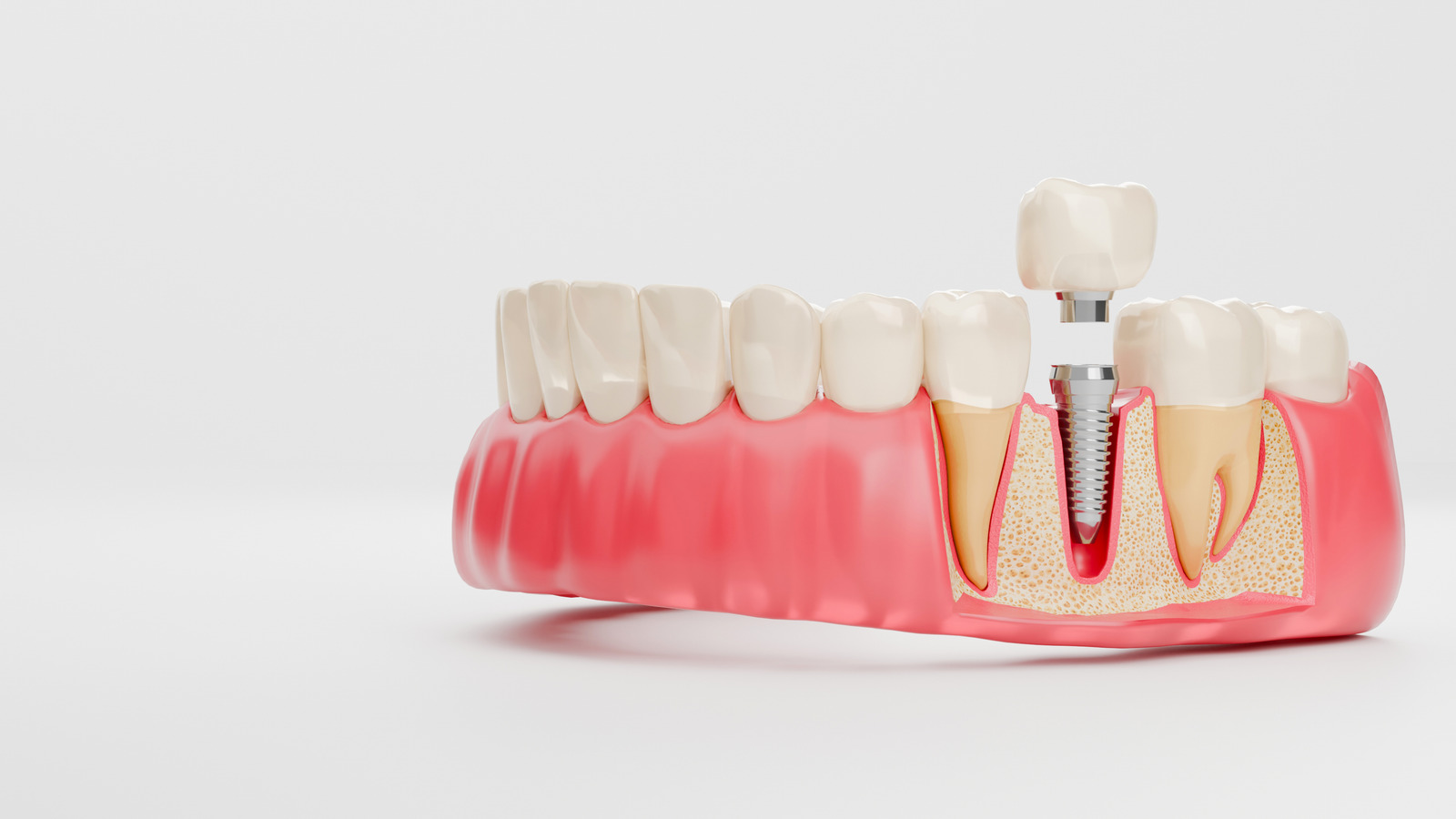
What we're really looking at is whether there's sufficient width and height of bone at the implant site, and if there isn't, whether it can be safely built up before or during placement.
At your consultation, we'll take a detailed look at the bone using dental imaging, which lets us see width, height and density in the specific area you need treated rather than guessing from an X-ray alone. This is the same imaging step every implant patient goes through, whether bone loss is a factor or not — see our guide on whether you're a good candidate for dental implants for more on what that assessment covers.
From there, we'll talk you through exactly what we're seeing and what it means for your options. Some patients have enough bone as-is. Others benefit from a bone graft first. We'll never recommend augmentation you don't actually need — it's an extra step, not a default add-on.
Bone grafting is a procedure that adds material to the jaw to rebuild lost volume, giving the implant a stronger foundation to integrate into. It's not always required — plenty of patients with mild to moderate bone loss have enough natural bone to proceed straight to implant placement.
Where grafting is needed, it typically means a period of healing before the implant itself can go in, which adds time to the overall treatment plan. This is worth knowing upfront so you can plan around it rather than being surprised partway through.
For the upper back jaw specifically, where the sinus sits close to the bone, a related procedure called a sinus lift is sometimes used instead of or alongside grafting to create the right amount of space.
For patients with more advanced bone loss, the conversation is usually less about whether implants are possible and more about which approach gets you there. This might mean a more involved graft, a longer healing period, or in some cases a referral for specialist input if the case falls outside what we'd manage directly at the practice.
We'd rather be upfront about this at consultation than let you find out partway through treatment. If your case needs more than we can offer in-house, we'll tell you that plainly and help you understand the next step.
Because grafting adds a healing stage before the implant can be placed, treatment involving bone augmentation generally takes longer overall than a straightforward implant placement. We'll give you a realistic timeline at your consultation rather than a generic one, since healing speed and the amount of building-up needed varies from person to person.
On cost, bone augmentation starts from £550 and a sinus lift from £995, in addition to the implant surgery and crown themselves — you can see the full breakdown on our fees page. We'll always set out the total cost for your specific case clearly before you commit to anything.
If you've been told you have bone loss and assumed implants were off the table, it's worth getting a proper assessment before ruling anything out. A quick look at an X-ray isn't the same as a full imaging-based evaluation of your specific jaw.
The best next step is to book a consultation with us at Limes Dental Practice in Gloucester. We'll assess your bone properly, talk you through what we find in plain terms, and set out a realistic plan — whether that's straight to implant placement or a short grafting stage first.